

If you or someone at home lives with diabetes in Vadodara, you have probably heard three kinds of advice: take your medicines, eat right and move more. All three matter. What people often miss is how they fit together in real life, in a real Gujarati kitchen, on a busy weekday. This guide explains how a complementary homeopathic approach, sensible food habits and small lifestyle changes can work side by side, always alongside your regular treatment.
Book Your Consultation – ₹499 (India) | $25 (NRI)
Homeopathy is complementary, not a replacement
Homeopathy is a complementary approach. It is not a substitute for insulin, tablets or the advice of your own doctor. Please never stop or change a medicine on your own. If you take insulin or glucose-lowering medicines, every change in diet or exercise should be aligned with your doctor, because your needs can change as your routine changes.
What a complementary approach looks at
In a homeopathic consultation the doctor looks at the whole person, not only the sugar number. Two people with the same HbA1c can have very different sleep, stress, digestion, cravings and energy. That personal picture helps in choosing practical habits that suit you, and in understanding what is happening behind your reports.
Part 1: Indian diet for diabetes, built around a Gujarati home
You do not need a separate diet for the person with diabetes. In most homes it works better when the whole family eats the same food with small changes.
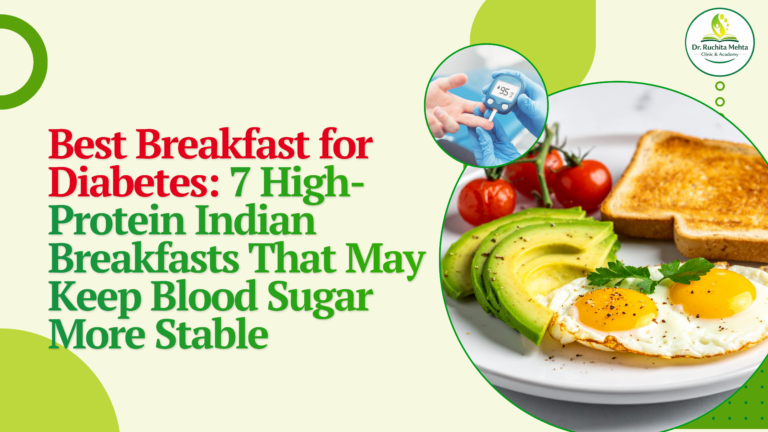
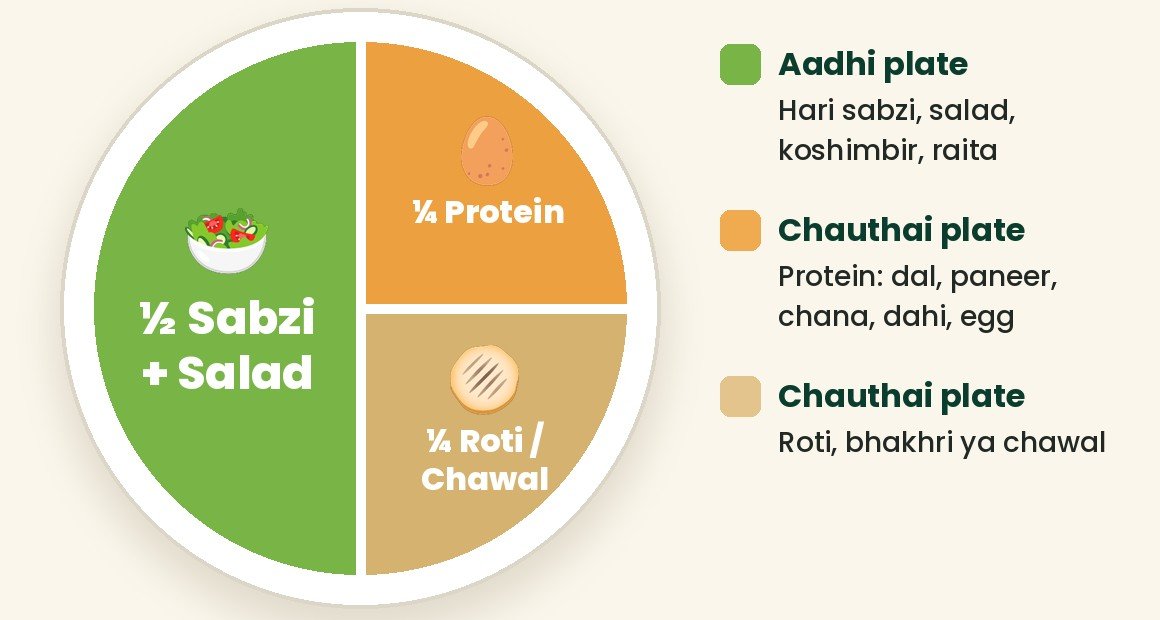
The plate idea. Fill about half the plate with vegetables and salad, a quarter with protein such as dal, curd, paneer, eggs or sprouts, and a quarter with roti or rice. Eating the salad and vegetables first and the roti or rice last is a simple order that many people find easier to manage.
Smart swaps, not strict bans.
- Maida (naan, white bread, biscuits) can be replaced with atta, multigrain, bajra or jowar rotla.
- Fruit juice can be replaced with a whole fruit, eaten slowly.
- Fried farsan can be replaced with roasted chana or makhana.
- Sweet tea can be reduced slowly, a little less sugar each week.
- A big bowl of rice can be a smaller portion with more dal and sabzi.
Gujarati thali ideas. Methi thepla made with atta and besan with curd for breakfast. Rotli or bajra rotla with sabzi, dal and salad at lunch. Vegetable khichdi with kadhi or curd and salad for a lighter dinner. Portion and timing are personal, so fix them with your doctor or educator.
Festivals and weddings. Instead of saying no to everything, have a small piece of mithai after a meal rather than on an empty stomach, eat something light at home before a function, and take half a plate of vegetables first.
Part 2: Lifestyle habits that quietly help
Movement. You do not need an hour at the gym. A 10 minute walk after meals, taking the stairs or walking while you talk on the phone adds up. Choose what you can repeat every day. If you take insulin, plan exercise with your doctor.
Sleep. Poor sleep often brings stronger cravings the next day. A fixed sleep time and less screen time at night are a good start.
Stress. Stress can show up as eating. Before you reach for a snack, drink a glass of water, take three slow breaths and ask yourself whether you are really hungry. Ten minutes of waiting is often enough to know.
Water and routine. Drink water through the day and try to keep meal times fairly regular.
Part 3: Blood sugar management starts with tracking
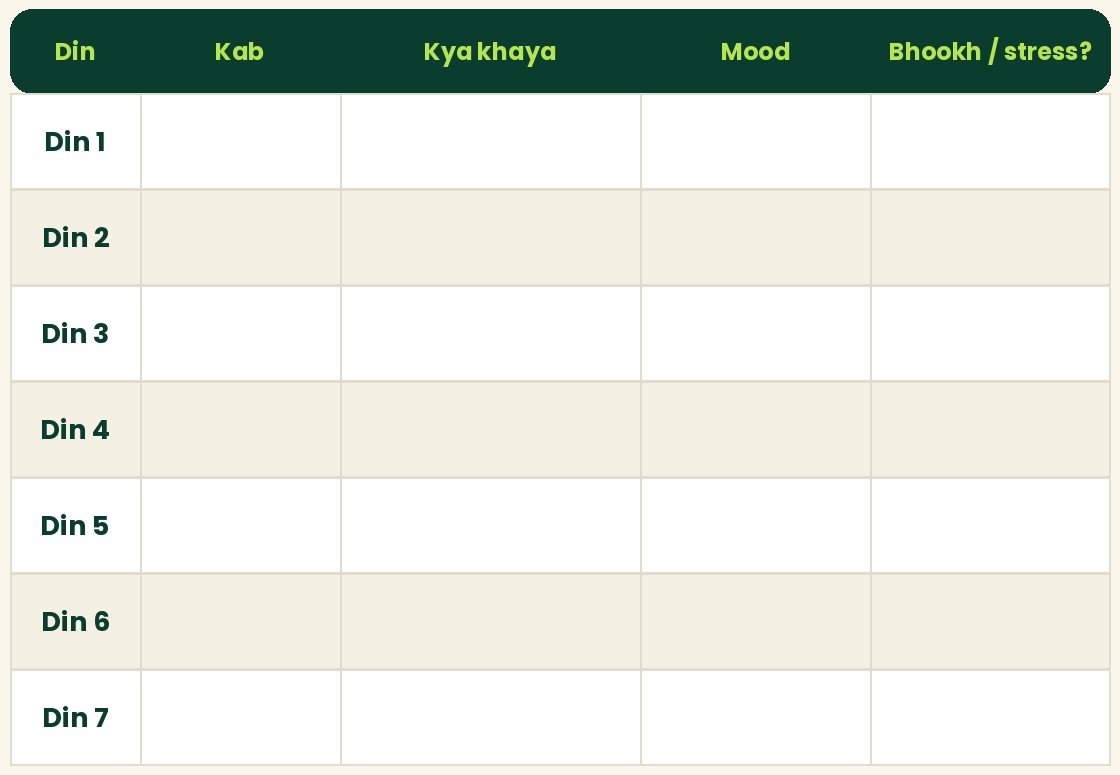
Write down your meals, mood and readings for a week. Patterns appear quickly: the evening snack after a long day, the sweet after dinner, the skipped breakfast. Once you see the pattern, you can change one thing at a time. Bring this diary to your consultation.
How the three work together
Medicines, if prescribed, are taken as advised. Food habits and daily routine support your overall wellbeing. A personalised consultation can help you review your lifestyle, food habits, stress, sleep and glucose patterns. Homeopathy, if considered, should remain complementary and must never replace evidence-based diabetes treatment. Progress is gradual and different for every person, and no result can be guaranteed.
About Dr. Ruchita Mehta
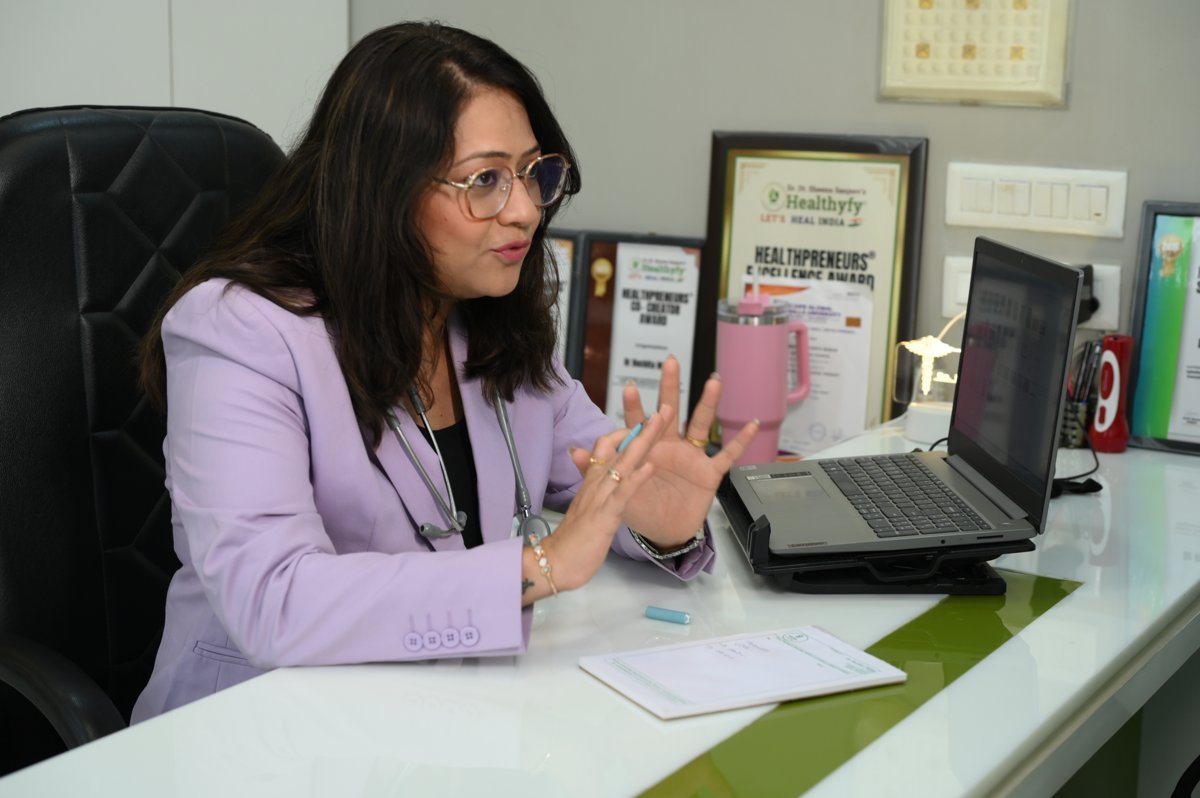
Dr. Ruchita Mehta is a BHMS homeopathic doctor and Certified Diabetes Educator in Vadodara. She lives with Type 1 diabetes herself, so she knows the daily reality of managing blood sugar. She has 16+ years of experience and has been welcoming patients at her Vadodara clinic since 2012. She focuses on clear explanations and habits that fit real life.
Frequently asked questions
Can homeopathy replace my diabetes medicines?
No. It is a complementary approach. Continue your medicines and insulin as prescribed and speak to your own doctor before any change.
Do I need a separate diet from my family?
Usually not. The same home food with smarter portions and swaps works for most families.
Is walking after meals enough?
It is a good, simple habit for many people. Your doctor can advise what is right for you, especially if you take insulin.
Can children and teenagers come for a consultation?
Yes, adults, teenagers and children are welcome, and a family member can come along.
Where can I get a diabetes consultation in Vadodara?
Dr. Ruchita Mehta's clinic is at SF-19 Earth Alpha, Vasna-Bhayli Main Road, Vadodara. You can read what happens in the first visit in our guide to the homeopathic consultation in Vadodara, or read how complementary care fits with diabetes in our post on homeopathy for diabetes in Vadodara.
What is the consultation fee?
₹499 for India and $25 for NRI patients.
Do I need an appointment?
Yes, please book in advance on WhatsApp or by phone (99982 79850).
Book a consultation
Book on WhatsApp Call 99982 79850
Consultation fee: ₹499 (India) | $25 (NRI)
Clinic: SF-19 Earth Alpha, Vasna-Bhayli Main Road, Vadodara 390007 (open in Google Maps)
Timings: Monday to Friday, 10:30 AM to 1:00 PM and 5:30 PM to 8:00 PM
WhatsApp or call: 99982 79850
More: About Dr. Ruchita Mehta | Diabetes consultation page
Written by Dr. Ruchita Mehta
BHMS | Certified Diabetes Educator | 16+ years of experience
Dr. Ruchita lives with Type 1 diabetes herself. Her own journey, from gestational diabetes to Type 1, is why she explains diabetes the way she wishes someone had explained it to her. Read more about Dr. Ruchita
Disclaimer: This article is for general information and does not replace advice from your own doctor. Please consult your doctor before making any change to your treatment.