
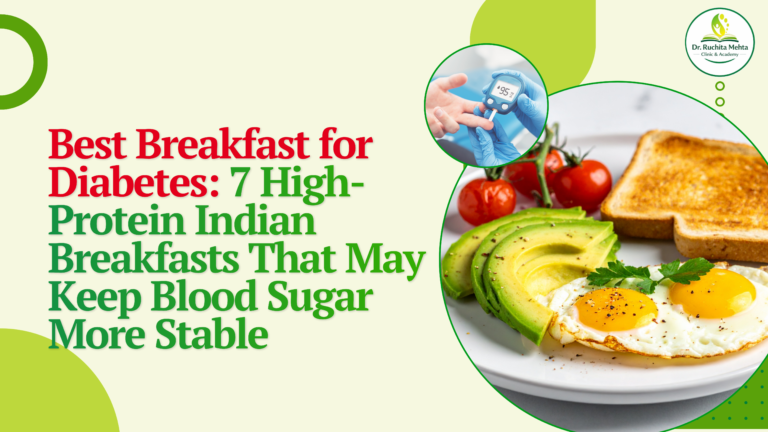
🍳 Best Breakfast for Diabetes: Why Your First Meal May Affect Your Blood Sugar All Day What did you eat for breakfast today? Poha? Paratha? Bread and tea? Oats? Or maybe you skipped breakfast completely. For someone with diabetes, breakfast isn't simply about "eating less sugar." The composition of your first meal can influence hunger, energy, post-meal glucose and what you eat later in the day. And here's the interesting part: A breakfast that looks healthy on Instagram isn't necessarily the best breakfast for diabetes. A bowl of plain oats. A fruit smoothie. Two slices of brown bread. A glass of juice. All can sound healthy—but the nutritional balance matters. So what should actually be on a diabetes-friendly Indian breakfast plate? 📑 Table of Contents 🩸 Why Breakfast Can Matter in Diabetes After waking up, your body is transitioning from an overnight fasting state to an eating state. Hormones involved in glucose regulation are active in the morning, and some people experience higher glucose levels around this time. Then breakfast adds another glucose challenge. That's why the same food may produce a different response depending on: 🚨 The Biggest Breakfast Mistake: Carbs + Carbs + Carbs Consider this breakfast: 2 slices bread + banana + sweet tea It may look small. But nutritionally, it's largely carbohydrate-based. Another example: Poha + banana + sweet chai Again, the meal can become carbohydrate-heavy. The issue isn't that these foods are automatically "bad." The issue is lack of balance. 🥚 Why Protein Deserves a …
1. Introduction: Mango for Diabetes and Weight Loss – Sweet and Smart?
If you think mango is off-limits due to its sugar content, it’s time to rethink. Mango for diabetes and weight loss is not just a possibility — it’s a strategic choice when done right. Often feared by diabetics and weight watchers, mangoes are actually nutrient powerhouses that can support healthy living.
Let’s explore why mango deserves a place in your diet even if you’re managing diabetes or aiming to lose weight.
2. Can Diabetics Eat Mango Safely?
Yes, absolutely — in moderation. The glycemic index (GI) of mango is around 51–56, which is in the low to moderate range.
✅ Why Mango for Diabetes Works:
-
Rich in fiber: Slows down sugar absorption.
-
Mangiferin: A unique antioxidant shown to improve insulin sensitivity.
-
Natural sugars + nutrients: Better than refined sugary snacks.
🟢 Smart Tip: Combine mango with protein (nuts or Greek yogurt) to minimize blood sugar spikes.
🔗 External Link: American Diabetes Association on fruit and diabetes
3. Mango for Weight Loss: A Sweet Advantage
Mangoes are naturally low in fat and calories and high in fiber, enzymes, and antioxidants. These properties help boost metabolism and improve digestion.
🔥 Key Weight Loss Benefits:
-
High satiety index: Keeps you full.
-
Aids fat metabolism: Thanks to polyphenols.
-
Boosts gut health: With digestive enzymes like amylase.
✅ Enjoy it pre-workout or as a healthy dessert alternative.
4. Mango and Disease Prevention: Beyond Blood Sugar
Mango is a potent anti-inflammatory and antioxidant-rich fruit.
🛡️ Health Benefits:
-
Heart Health: Mangiferin and fiber lower LDL cholesterol.
-
Immunity Boost: Vitamin C, A, and E strengthen the immune system.
-
Eye Health: Beta-carotene supports vision.
-
Liver Support: Mango may improve liver enzyme function.
5. How to Eat Mango Smartly for Blood Sugar Control
-
✅ Portion: 80–100g (½ cup diced mango)
-
🕒 Best Time: Mid-morning or pre/post-workout
-
🍽️ Combine With: Proteins or fats (nuts, yogurt)
-
❌ Avoid: Juices, smoothies with added sugar, or large portions
6. Mango Portion Guide for Diabetics & Weight Loss
| Goal | Portion Size | Frequency | Pair With |
|---|---|---|---|
| Diabetes Management | ½ cup | 2–3x/week | Greek yogurt, nuts |
| Weight Loss | 100–150g | 3–4x/week | Lean protein, chia |
| Disease Prevention | 1 slice/day | Seasonal | High-fiber breakfast |
7. Conclusion: Mango for Diabetes and Weight Loss is Possible – If You Eat It Right
The myth that mangoes are unhealthy for diabetics or those trying to lose weight has been debunked by science. With its fiber, antioxidants, enzymes, and vitamins, mango supports blood sugar stability, fat burning, and even disease prevention.
So yes, mango for diabetes and weight loss is not just safe — it’s smart. You just need the right strategy.
8. FAQs – Mango for Diabetes and Weight Loss
Q. Can mango spike blood sugar levels in diabetics?
A: If eaten in moderation with protein or fat, mango does not cause a sharp spike.
Q. Is mango helpful for belly fat reduction?
A: Mango improves satiety and digestion, which helps reduce overeating and supports fat loss.
Q. What’s the best time to eat mango for weight loss?
A: Mid-morning or pre-workout is ideal.