
Blog Page

January 31, 2026

Diabetes Morning Sugar Spike: The Real Reason Your Fasting Sugar Is High Despite Early Dinner You eat dinner at 7 pm.You avoid carbs.You even skip dessert. Still, your fasting sugar is high. This is not failure. This is diabetes morning sugar spike — and food is not the main culprit. 1. What Is Diabetes Morning Sugar Spike? Diabetes morning sugar spike refers to high fasting blood glucose caused by overnight hormonal activity, not what you ate the night before. Your body raises sugar on purpose — even when you’re sleeping. 2. Why Fasting Sugar Is Hardest to Control Post-meal sugar depends on food.Fasting sugar depends on hormones. That’s why: You’re fighting biology, not diet mistakes. 3. The Dawn Phenomenon Explained Simply Between 3 am – 8 am, your body releases: These hormones signal the liver to: “Release glucose. It’s time to wake up.” In diabetics, insulin can’t control this release properly — so sugar spikes. 4. Cortisol, Liver & Overnight Glucose Release Cortisol is highest in early morning. Cortisol: This is why stress and poor sleep worsen morning readings. 5. Why Early Dinner Alone Doesn’t Work Early dinner helps digestion — but it doesn’t stop hormonal glucose release. Many diabetics starve at night hoping for better morning sugar. Result: Skipping food can backfire. 6. The Big Mistake Diabetics Make at Night Going to bed: This raises cortisol. High cortisol at night = higher morning sugar. Night routine matters more than night food. 7. Signs Your Morning Sugar Is Hormone-Driven You …

January 31, 2026

Diabetes Sleep Debt: The Dangerous Reason Blood Sugar Stays High Even on a Perfect Diet Table of Contents Diabetes Sleep Debt: The Dangerous Reason Blood Sugar Stays High Even on a Perfect Diet You ate clean.You walked.You skipped dessert. Yet your fasting sugar is higher. This isn’t food failure.This is diabetes sleep debt. 1. What Is Diabetes Sleep Debt? Diabetes sleep debt is chronic mismatch between your biological clock and your lifestyle. It’s not just “less sleep.” It’s: Your body keeps score — even if you feel “used to it.” 2. Why One Bad Night Affects Sugar All Day Just one night of poor sleep: This is why fasting sugar spikes after late nights. 3. Sleep Timing vs Sleep Hours Sleeping 7 hours at the wrong time≠Sleeping 6 hours at the right time. Late sleep shifts: Timing matters more than quantity. 4. The Cortisol–Glucose–Sleep Loop Poor sleep → high cortisolHigh cortisol → high glucoseHigh glucose → poor sleep This vicious cycle keeps diabetics stuck. 5. How Sleep Debt Creates Insulin Resistance Sleep debt: Even perfect meals can’t override this damage. 6. Night Owls, Early Risers & Diabetes Risk Chronic night owls have: Modern schedules clash with biology — diabetics pay the price. 7. Signs Your Sugar Is Sleep-Driven You may have diabetes sleep debt if: This is sleep metabolism talking. 8. Why Naps Don’t Fix Sleep Debt Daytime naps: They mask fatigue, not repair metabolism. 9. Repairing Sleep Without Medication No pills. No hacks. ✔ Fixed sleep-wake window ✔ Sunlight …

January 19, 2026

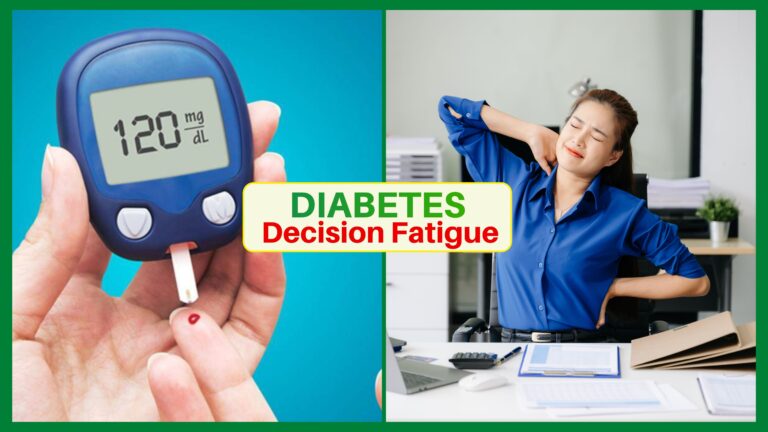
Diabetes Decision Fatigue: The Hidden Mental Overload That Secretly Worsens Blood Sugar Table of Contents Diabetes Decision Fatigue: The Hidden Mental Overload That Secretly Worsens Blood Sugar Diabetes doesn’t just live in your blood. It lives in your head. Every day, a diabetic makes hundreds of micro-decisions: This constant mental load creates diabetes decision fatigue — a silent driver of poor sugar control. 1. What Is Diabetes Decision Fatigue? Diabetes decision fatigue is the mental exhaustion caused by continuously managing: The brain gets tired before the body does. And a tired brain makes poor metabolic decisions. 2. Why Diabetics Feel Mentally Exhausted Unlike non-diabetics, diabetics can’t act on autopilot. Every action requires calculation. This constant alertness: Mental exhaustion becomes biological damage. 3. How Mental Load Raises Blood Sugar When the brain is overloaded: You may not eat anything —yet sugar spikes. This is why sugar rises on stressful days even with “perfect” food. 4. The Brain–Glucose–Cortisol Connection Decision fatigue activates survival mode. Survival mode: Your body thinks it’s under threat —so it keeps sugar high. 5. Why “More Discipline” Makes It Worse Most advice says: “Be more strict.” But strictness increases: More rules = more fatigue = worse control. Discipline without simplicity backfires. 6. Signs Your Sugar Is Mind-Driven You may have diabetes decision fatigue if: This is not lack of willpower. It’s cognitive overload. 7. Decision Fatigue vs the Willpower Myth Willpower is finite. Every decision uses it. By evening: This is why night sugar is often worse. 8. …

January 16, 2026

Diabetes Muscle Loss: The Shocking Reason Blood Sugar Rises Even When You Eat Less Table of Contents Diabetes Muscle Loss: The Shocking Reason Blood Sugar Rises Even When You Eat Less If blood sugar control was only about food,every diabetic eating less would be cured. But they’re not. Because diabetes muscle loss is silently sabotaging glucose control. 1. What Is Diabetes Muscle Loss? Diabetes muscle loss is accelerated breakdown of muscle tissue caused by: Muscle isn’t just for looks. It’s your largest glucose-burning organ. 2. Why Muscle Is Your Real Sugar Storage Over 70% of glucose is stored and used by muscles. More muscle =✔ better insulin sensitivity✔ lower fasting sugar✔ lower HbA1c Less muscle =❌ sugar floating in blood❌ pancreas overworking Fat doesn’t burn sugar.Muscle does. 3. How Diabetes Accelerates Muscle Breakdown High blood sugar: Insulin resistance means: This is why long-term diabetics feel weak, tired, and stiff. 4. The “Eat Less, Get Worse” Trap Many diabetics are told: “Eat less to control sugar.” Result? Sugar drops short-term.Long-term control collapses. 5. Why Cardio Alone Backfires Endless walking without strength work: Cardio is not evil —but cardio without muscle support worsens diabetes muscle loss. 6. Muscle Loss vs Insulin Resistance This is a vicious cycle: Muscle loss → insulin resistance → higher sugar → more muscle loss Breaking this cycle is more powerful than adding medicines. 7. Signs You’re Losing Muscle Without Realising You may have diabetes muscle loss if: This is not ageing.It’s metabolic muscle damage. 8. Age, Hormones …

January 15, 2026

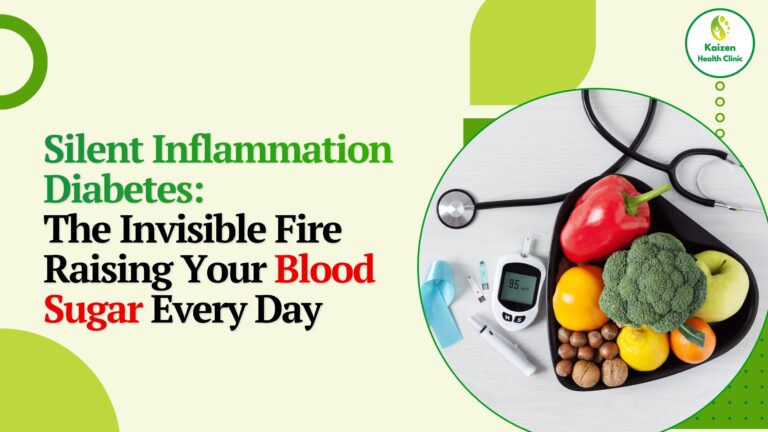
Silent Inflammation Diabetes: The Invisible Fire Raising Your Blood Sugar Every Day Table of Contents Silent Inflammation Diabetes: The Invisible Fire Raising Your Blood Sugar Every Day You eat clean.You take medicines.You walk daily. Still, your blood sugar refuses to cooperate. This isn’t bad luck. This is silent inflammation diabetes — a hidden biological fire burning under the surface. 1. What Is Silent Inflammation Diabetes? Silent inflammation is low-grade, chronic inflammation that doesn’t cause pain, fever, or obvious symptoms. But it: No redness.No swelling.Just numbers climbing. 2. Why Blood Sugar Rises Without Obvious Reason Inflammation interferes with insulin signaling. When cells are inflamed: This is why sugar rises even when food hasn’t changed. 3. Inflammation vs Insulin: The War Inside Inflammatory chemicals like: literally block insulin pathways. Your body isn’t ignoring insulin —it’s too inflamed to listen. 4. Common Sources You’re Ignoring Silent inflammation doesn’t come only from junk food. Major hidden triggers: You may be eating right — but living inflamed. 5. Why Normal Reports Miss It Most diabetics check: But inflammation markers like CRP are rarely tracked. So doctors adjust medicines —while the real cause stays untouched. 6. The Gut–Inflammation–Glucose Axis An unhealthy gut: This is why: often coexist with poor sugar control. 7. Stress Inflammation Nobody Talks About Mental stress isn’t “just emotional.” Chronic stress: Even silent worry can raise sugar. Relaxation is not luxury —it’s glucose management. 8. Signs Your Sugar Is Inflammation-Driven You may have silent inflammation diabetes if: These are inflammation fingerprints. 9. How …

January 15, 2026

Diabetes Decision Fatigue:Why Making Too Many “Healthy Choices”Is Wrecking Your Blood Sugar Table of Contents Diabetes Decision Fatigue: Why Making Too Many “Healthy Choices” Is Wrecking Your Blood Sugar You’re doing everything right. Counting carbs.Reading labels.Checking sugar.Planning meals.Avoiding mistakes. So why is your blood sugar still unstable? Because diabetes doesn’t just drain the body —it exhausts the brain. This is called Diabetes Decision Fatigue. 1. What Is Diabetes Decision Fatigue? Decision fatigue happens when the brain is forced to make too many choices, reducing its ability to regulate stress and self-control. For diabetics, decisions never stop: Each decision costs mental energy. 2. Why Diabetics Experience It More A non-diabetic eats automatically. A diabetic: This creates constant low-grade stress — even on “good” days. Stress doesn’t disappear. It converts into cortisol. 3. The Brain–Glucose Connection The brain runs primarily on glucose. Mental overload causes: Ironically, thinking too much about sugar raises sugar. 4. Cortisol, Willpower & Sugar Spikes Decision fatigue lowers willpower. Low willpower leads to: Cortisol then: Not because you’re careless —but because your brain is tired. 5. Why Overthinking Food Backfires Rigid food rules increase cognitive load: This mental stress: Sometimes simpler meals = better sugar, not “perfect” ones. 6. Decision Fatigue & Night Cravings By evening: The brain looks for fast relief. Sugar becomes the quickest comfort. Cravings aren’t about hunger.They’re about mental exhaustion. 7. Hidden Signs You’re Mentally Exhausted You may have diabetes decision fatigue if: This is neurological fatigue — not lack of discipline. 8. The …

December 28, 2025

Diabetes Emotional Suppression Effect: 9 Shocking Ways “Holding It In” Is Raising Your Blood Sugar You stay calm.You don’t complain.You handle everything quietly. Yet your blood sugar remains unstable. Here’s a truth that makes many people uncomfortable: Unexpressed emotions are metabolically expensive. Welcome to the Diabetes Emotional Suppression Effect — a hidden stress pathway where holding back emotions silently drives cortisol, insulin resistance, and stubborn glucose spikes. 1. What Is the Diabetes Emotional Suppression Effect? The Diabetes Emotional Suppression Effect occurs when emotions are constantly restrained instead of processed, causing the nervous system to stay in a low-grade stress state. Common suppressed emotions include: Your body doesn’t ignore these emotions. It stores them as stress signals. 2. Why Emotions Are a Metabolic Signal From a biological standpoint: When emotions arise but action is blocked, the body still prepares. So it releases glucose. No action follows.No glucose is used.Blood sugar rises. 3. How Suppressed Emotions Trigger Cortisol When emotions are expressed: When emotions are suppressed: This creates chronic, invisible insulin resistance. 4. The Liver’s Stress–Glucose Response Your liver is highly sensitive to emotional stress. Cortisol signals the liver to: This is why emotionally heavy days often show: 5. Why “Strong” People Often Struggle More People who: …often suppress stress continuously. This doesn’t make them resilient. It keeps their nervous system permanently activated. Strong on the outside.Stressed on the inside.High sugar on the meter. 6. Emotional Suppression & Fasting Sugar Suppressed emotions don’t disappear at night. During sleep: This explains why: Food …

December 28, 2025

Diabetes Decision Fatigue Effect: 8 Surprising Ways Mental Exhaustion Is Sabotaging Your Blood Sugar You wake up motivated.You plan to “do everything right.” But by evening: Here’s the truth no one explains: Your blood sugar is not failing because you lack willpower — it’s failing because your brain is exhausted. Welcome to the Diabetes Decision Fatigue Effect — a hidden psychological-metabolic loop where constant thinking, planning, resisting, and monitoring silently raise blood sugar. 1. What Is the Diabetes Decision Fatigue Effect? Decision fatigue is the mental exhaustion that occurs when your brain makes too many choices. Diabetics face decisions all day: Each decision drains cognitive energy. When mental energy drops, stress hormones rise. And stress hormones raise blood sugar. 2. Why the Diabetic Brain Gets Exhausted Faster Living with diabetes means: This creates chronic cognitive load. Your brain is never truly off-duty. Over time: This is not laziness.This is neurobiology. 3. How Mental Fatigue Raises Blood Sugar When the brain is tired: This happens even without food. Mental exhaustion tells your body: “We’re under pressure. Release energy.” That energy is glucose. 4. Cortisol, Willpower & Insulin Resistance Willpower is a limited resource. As it depletes: At the same time: This is why sugar control often collapses later in the day — not because of food, but because of mental depletion. 5. Why Good Intentions Collapse by Evening Morning you = rested brainEvening you = depleted brain A depleted brain: So you may: This is not failure.It’s decision fatigue physiology. 6. …

December 22, 2025

Diabetes Sensory Overload Effect:8 Disturbing Ways Noise, Crowds & Constant Stimulation Raise Blood Sugar Table of Contents Diabetes Sensory Overload Effect: 8 Disturbing Ways Noise, Crowds & Constant Stimulation Raise Blood Sugar You check your sugar after a long day out. You didn’t overeat.You didn’t skip medicine.Yet your reading is higher than expected. Here’s a reality most diabetics are never told: Your blood sugar can rise simply because your senses were overwhelmed. Welcome to the Diabetes Sensory Overload Effect — a modern metabolic problem created by noise, crowds, constant alerts, bright lights, and nonstop stimulation. 1. What Is the Diabetes Sensory Overload Effect? The Diabetes Sensory Overload Effect occurs when continuous sensory input overwhelms the nervous system, triggering stress hormones that raise blood sugar. Sensory overload includes: Your brain interprets this as threat — even if you feel “fine.” 2. The Nervous System–Blood Sugar Connection Your nervous system has two modes: Sensory overload keeps your body stuck in alert mode. In alert mode: No food required. 3. How Noise Raises Glucose Levels Chronic noise exposure: This is why: …often lead to unexpected sugar spikes. Your ears can raise your blood sugar. 4. Crowded Environments & Insulin Resistance Crowds signal danger to the primitive brain. Even without conscious fear: For diabetics, this means: This explains why people often spike during travel, events, or social gatherings — even with controlled meals. 5. Multisensory Stress and Cortisol Overload Modern life overstimulates multiple senses at once: This creates cortisol stacking — small stressors adding …