
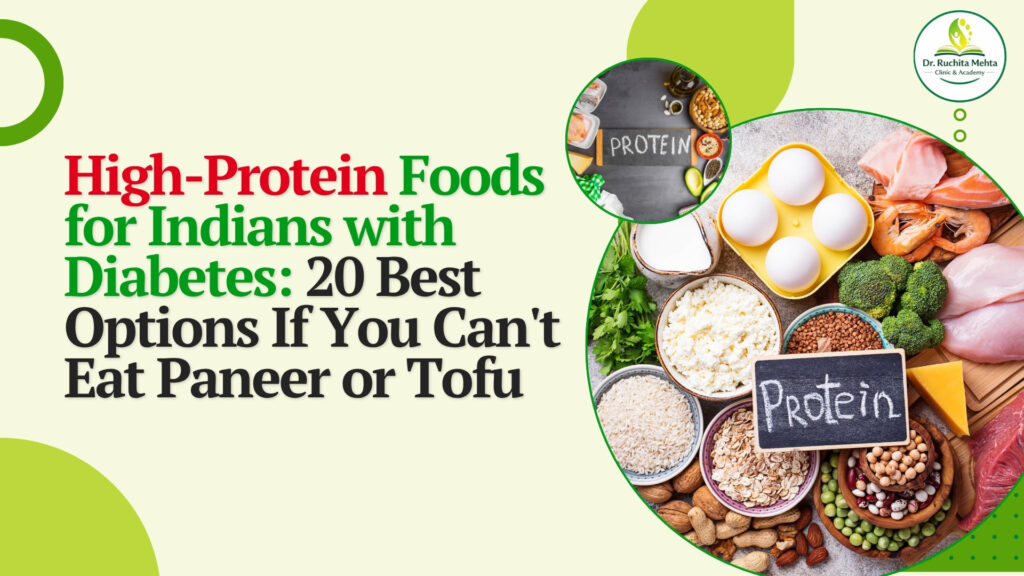
When people with diabetes are told to “eat more protein,” the advice usually stops at:
 Paneer Tofu
But what if you:
The good news is that there are plenty of affordable, Indian-friendly, high-protein foods that help stabilize blood sugar, reduce cravings, and improve insulin sensitivity.
Let’s explore the best options.
 Table of Contents
Protein helps by:
 Slowing glucose absorption
Reducing post-meal sugar spikes
Improving fullness
Supporting muscle mass
Helping insulin work more efficiently
| Benefit | How It Helps Diabetes |
|---|---|
| Slower digestion | Prevents rapid glucose spikes |
| Increased satiety | Reduces overeating |
| Muscle maintenance | Improves glucose utilization |
| Better metabolism | Supports insulin sensitivity |
Eggs are inexpensive, versatile, and almost carb-free.
Approximately 6–7g per egg
| Serving | Protein |
|---|---|
| 1 Egg | 6–7 g |
| 2 Eggs | 12–14 g |
Lean chicken is one of the highest-quality proteins.
It supports:
| Serving | Protein |
|---|---|
| 100 g Chicken Breast | 30–31 g |
Choose grilled, roasted, or lightly cooked versions.
Fish provides protein plus heart-healthy omega-3 fats.
Good Indian choices:
| Fish (100 g) | Protein |
|---|---|
| Rohu | 20–22 g |
| Salmon | 22–25 g |
| Pomfret | 19–21 g |
If you tolerate dairy but dislike paneer,
Greek yogurt is an excellent choice.
It contains:
High protein
Probiotics
Lower carbohydrates
| Serving | Protein |
|---|---|
| 200 g Greek Yogurt | 18–20 g |
Choose unsweetened versions.
One of India’s most underrated proteins.
Benefits:
| Serving | Protein |
|---|---|
| 50 g Sattu | 10–11 g |
Mix with water, roasted cumin, coriander, lemon, and black salt.
Avoid adding sugar.
A perfect travel-friendly snack.
Rich in:
| Serving | Protein |
|---|---|
| 50 g | 9–10 g |
Pair with cucumber or buttermilk.
If you only dislike tofu, soy chunks are a great alternative.
| Serving | Protein |
|---|---|
| 50 g Dry | 24–26 g |
Use in pulao, curry, or stir-fries.
Different dals provide moderate protein with fiber.
| Dal | Protein (Cooked Cup) |
|---|---|
| Moong Dal | 14 g |
| Masoor Dal | 18 g |
| Toor Dal | 11 g |
| Urad Dal | 13 g |
Combine with vegetables for better blood sugar control.
Sprouting improves nutrient availability.
Great options:
| Serving | Protein |
|---|---|
| 1 Cup | 8–10 g |
Affordable and protein-rich.
Also provide healthy fats.
| Serving | Protein |
|---|---|
| 30 g | 7–8 g |
Avoid salted or fried versions.
A diabetes-friendly snack loaded with:
| Serving | Protein |
|---|---|
| 30 g | 8–9 g |
Rich in protein and healthy fats.
| Serving | Protein |
|---|---|
| 30 g | 6 g |
| Food | Protein (per serving) | Vegetarian |
|---|---|---|
| Chicken Breast (100 g) | 31 g | |
| Fish (100 g) | 20–25 g | |
| Greek Yogurt (200 g) | 20 g | |
| Soy Chunks (50 g) | 25 g | |
| Eggs (2) | 12–14 g | (ovo-vegetarian) |
| Sattu (50 g) | 10–11 g | |
| Roasted Chana | 9–10 g | |
| Pumpkin Seeds | 9 g | |
| Sprouts | 8–10 g | |
| Almonds | 6 g | |
| Meal | Better Combination |
|---|---|
| Breakfast | Sattu drink + boiled eggs |
| Mid-Morning | Roasted chana + cucumber |
| Lunch | Dal + mixed vegetables + salad |
| Evening | Greek yogurt + pumpkin seeds |
| Dinner | Grilled fish/chicken + vegetables |
Combining protein with fiber helps keep blood sugar more stable.
Many foods are marketed as “healthy” but provide very little protein.
| Food | Reality |
|---|---|
| Peanut butter | Mostly fat |
| Oats | Moderate protein, mainly carbs |
| Almond milk | Very little protein |
| Coconut milk | Low protein |
| Protein biscuits | Often high in refined flour and sugar |
Always read nutrition labels rather than relying on marketing claims.
Protein needs vary based on age, activity level, kidney health, and body weight.
A general guide for healthy adults is:
| Activity Level | Approximate Daily Protein Intake* |
|---|---|
| Sedentary | 0.8–1.0 g/kg body weight |
| Active | 1.0–1.2 g/kg body weight |
| Strength training | 1.2–1.6 g/kg body weight |
*People with kidney disease or other medical conditions should follow individualized advice from their healthcare provider.
Following a diabetes-friendly, high-protein diet does not require paneer or tofu.
Indian kitchens already offer many excellent alternatives—from eggs, fish, and chicken to sattu, roasted chana, lentils, sprouts, seeds, and Greek yogurt.
Instead of relying on a single food, aim to include a variety of protein sources throughout the day. This approach supports better blood sugar control, improves satiety, helps preserve muscle mass, and makes your diet more enjoyable and sustainable.