
Most women think PCOD (PCOS) is only about irregular periods, acne, or weight gain.
That’s the surface.
Underneath, there is a powerful metabolic disorder silently increasing the risk of prediabetes and type 2 diabetes — often years before symptoms appear.
This connection is not optional or rare.
It is biological, predictable, and preventable.
Let’s break it down clearly.
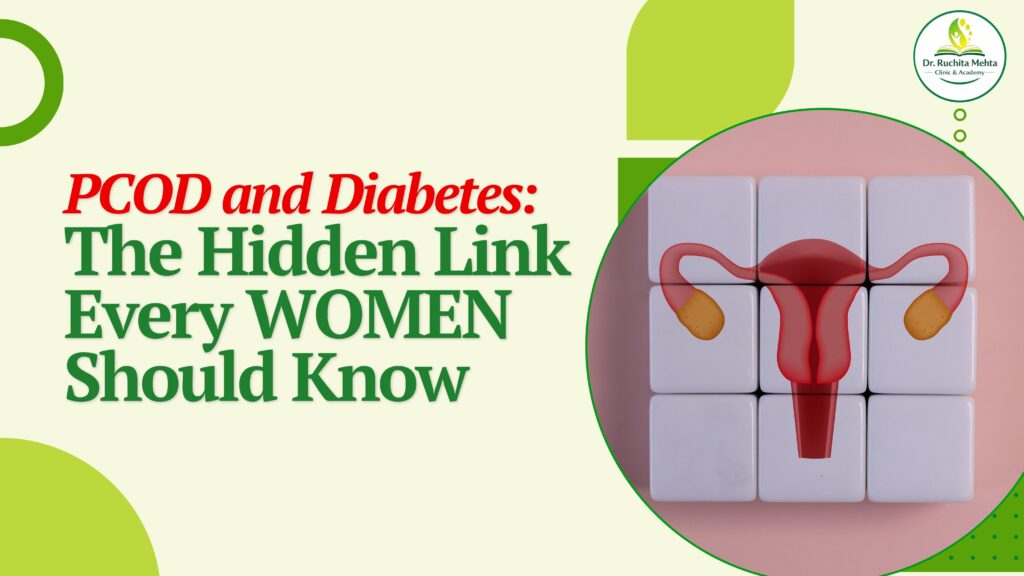
Polycystic Ovarian Disease (PCOD/PCOS) is a hormonal + metabolic disorder, not just a reproductive issue.
Key features:
But the root driver in most cases is:
 Insulin Resistance
And this is where diabetes enters the story.
Insulin is the hormone that helps glucose enter your cells to be used as energy.
When the body becomes resistant to insulin:
This condition is called insulin resistance, and it sits at the center of both PCOD and Type 2 Diabetes.
High insulin levels directly affect the ovaries.
Excess insulin tells the ovaries to produce more androgens (male hormones).
This leads to:
| High Insulin Effect | What Happens in PCOD |
|---|---|
| ↑ Androgen production | Acne, facial hair, hair loss |
| Disrupted ovulation | Irregular or missing periods |
| Fat storage increases | Weight gain, belly fat |
| Cravings increase | Sugar and carb cravings |
| Inflammation rises | Fertility issues |
This is why PCOD is often called a metabolic condition with reproductive symptoms.
Women with PCOD are 4–7 times more likely to develop Type 2 Diabetes.
Here’s why the progression happens silently:
Blood sugar still appears “normal” in basic tests.
Body pumps excess insulin to compensate.
Fasting glucose begins to rise.
Pancreas gets exhausted → blood sugar rises permanently.
This process can take 5–15 years and often goes unnoticed.
If you have PCOD and notice these signs, insulin resistance is likely active:
These are not random symptoms.
They are early metabolic warning signs.
PCOD fat is not just cosmetic fat.
It is visceral fat — fat around organs that actively worsens insulin resistance.
Visceral fat releases inflammatory chemicals that:
This creates a vicious cycle:
Insulin resistance → weight gain → more insulin resistance
Many women are given:
These may regulate periods temporarily.
But they do not fix insulin resistance.
That means:
Managing PCOD without addressing metabolism is like
turning off a fire alarm without putting out the fire.
Insulin resistance is highly responsive to lifestyle changes.
When insulin improves:
This is why early action matters.
High intake of:
causes repeated insulin spikes → worsens PCOD + diabetes risk.
Stress raises cortisol, which:
Stress is a major hormonal disruptor.
Sleeping less than 6–7 hours:
Even 1 week of poor sleep can worsen blood sugar control.
Muscles are the biggest glucose users.
Low activity = glucose stays in blood = insulin rises.
Here’s the practical action plan.
Focus on:
Limit:
Best exercises for insulin sensitivity:
Even 30 minutes daily can dramatically improve insulin response.
Aim for:
Sleep is a hormone regulator.
Simple tools:
Stress management is metabolic medicine.
PCOD is not just a reproductive disorder.
It is an early warning sign of metabolic dysfunction.
If ignored:
→ Prediabetes
→ Type 2 Diabetes
→ Heart disease risk
If addressed early:
→ Hormones balance
→ Periods improve
→ Fertility improves
→ Diabetes risk drops
Your body is giving signals.
The earlier you respond, the easier the reversal.
The connection between PCOD and diabetes is strong, real, and backed by science.
But it is also one of the most preventable health risks when tackled early.
Awareness + lifestyle changes = powerful prevention.
If you have PCOD and want to reduce your diabetes risk naturally, start by focusing on insulin health today.
Small daily habits can create massive long-term change.